
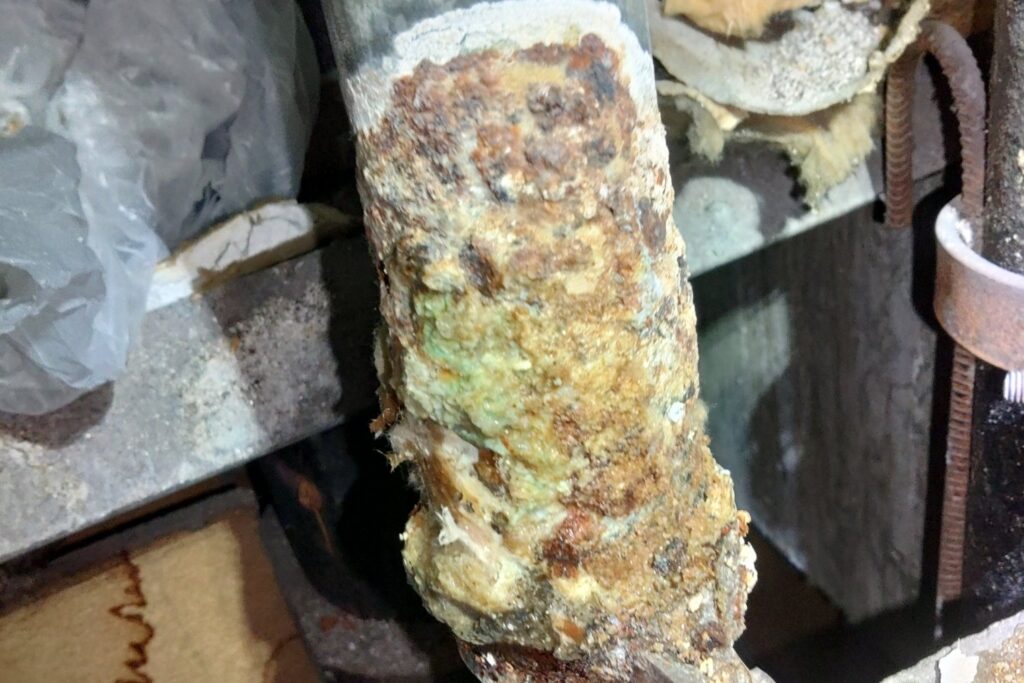
One leak is a repair. Leaks in different parts of the house inside the same year is a repipe. That’s the short answer to when to repipe a house. The rest of this article is the long one: the signs we look for, how to check for a hidden leak yourself, and when a repair is still the right call.
When to repipe a house: the signs
Leaks in different parts of the house
A single leak can be a fluke: a bad fitting, or a nail through a line during a remodel. Leaks that move around the house are something else. When a pinhole in the kitchen line this spring is followed by a leak in the hall bathroom this fall, the individual repairs aren’t the problem. The pipe system is. In between one leak and a pattern, it comes down to the material, the age, and how close together the leaks came.
Pinholes in copper
Copper corrodes from the inside out, so a pinhole says more about the run than the spot. The first pinhole is a repair. The second in the same house means the whole run.
Low pressure, especially on the hot side
Weak flow at one faucet usually points to a clogged aerator or a partly closed valve, which is a five-minute fix. Low pressure all over the house is different. In galvanized pipe, years of scale narrow the inside of the pipe until water can’t move freely, even with no visible leak anywhere, and Tulsa’s hard water speeds that up. One tell is a hot side noticeably weaker than the cold, because the hot lines scale up first.
Rusty, brown, or flaky water
Discolored water from the hot tap only usually points to the water heater, not the pipes. When the cold side runs discolored too, look at the supply lines. Reddish-brown water from galvanized pipe means rust is coming off the inside of the pipe, and flakes in your water are the same story further along. Blue-green staining around copper fittings points to copper corrosion.
A water bill that jumped with no explanation
Your water meter will tell you before your eyes will. Shut off every faucet, the ice maker, and the irrigation, then watch the small triangle on the meter. If it’s still moving, water is going somewhere.
Check the toilets first, the quietest water thief in a house. Drop food coloring in the tank, don’t flush, and look in the bowl in fifteen minutes. Color means the flapper is passing water, and that’s a cheap fix you can do yourself. If the toilets pass and the meter still moves, the leak is likely underground or under the slab. We isolate and pressure test sections ourselves and run acoustic gear that hears water under concrete.
Age and material: what the numbers mean
Galvanized pipe
Galvanized steel can easily last 60 to 70 years, and a lot of Tulsa’s older neighborhoods are past that now. If you’re seeing leaks, flakes in your water, or low pressure, it’s time to repipe.
When age alone isn’t enough to decide
An older copper system with clear water, solid pressure, and no leaks may have plenty of service left. The conversation changes when an aging galvanized system also has rust in the cold water and a second leak this year. Age without symptoms is a reason to plan. Age combined with symptoms is a reason to move.
When a repair is still the right call
A first leak on a system that pressure tests clean, with clear water, steady pressure at every fixture, and an obvious local cause, is a leak repair, not a repipe. We’ll tell you which one you’re looking at, even when it’s the cheaper one.
What about a slab leak?
A slab leak is a water line that’s failed under the concrete your house sits on. We locate it, then either open the concrete and replace that section or run a new line overhead through the attic. We do both in house. On an older system, one slab failure is often the first of several, so a second slab leak, or a first one on an aging system, is the time to get a repipe estimate. We replace the concrete we open, and flooring over the patch is a flooring contractor’s work.
Why waiting costs more
A slow leak inside a wall doesn’t stay small. It soaks insulation, rots framing, and stains drywall long before you see it from the room side. And insurance generally covers sudden, accidental water damage, not the pipe that caused it, so a slow leak seeping for months gets denied as maintenance.
Planning a repipe on your own schedule beats having the third leak make the decision for you. It’s typically a 1 to 3 day job, and we turn the water back on before we leave every evening. For what it costs and what to budget, see our home repipe cost guide.
Seeing two or more of these signs?
Call Tulsa Plumbing & Remodeling at (918) 800-4426. We’ll test the lines, tell you exactly what we find, and recommend only what the system actually needs. If it’s time, our whole-home repiping runs PEX by default, we pull the plumbing permit ourselves, and our labor carries a one-year warranty. If a repair will do, we’ll tell you that too.